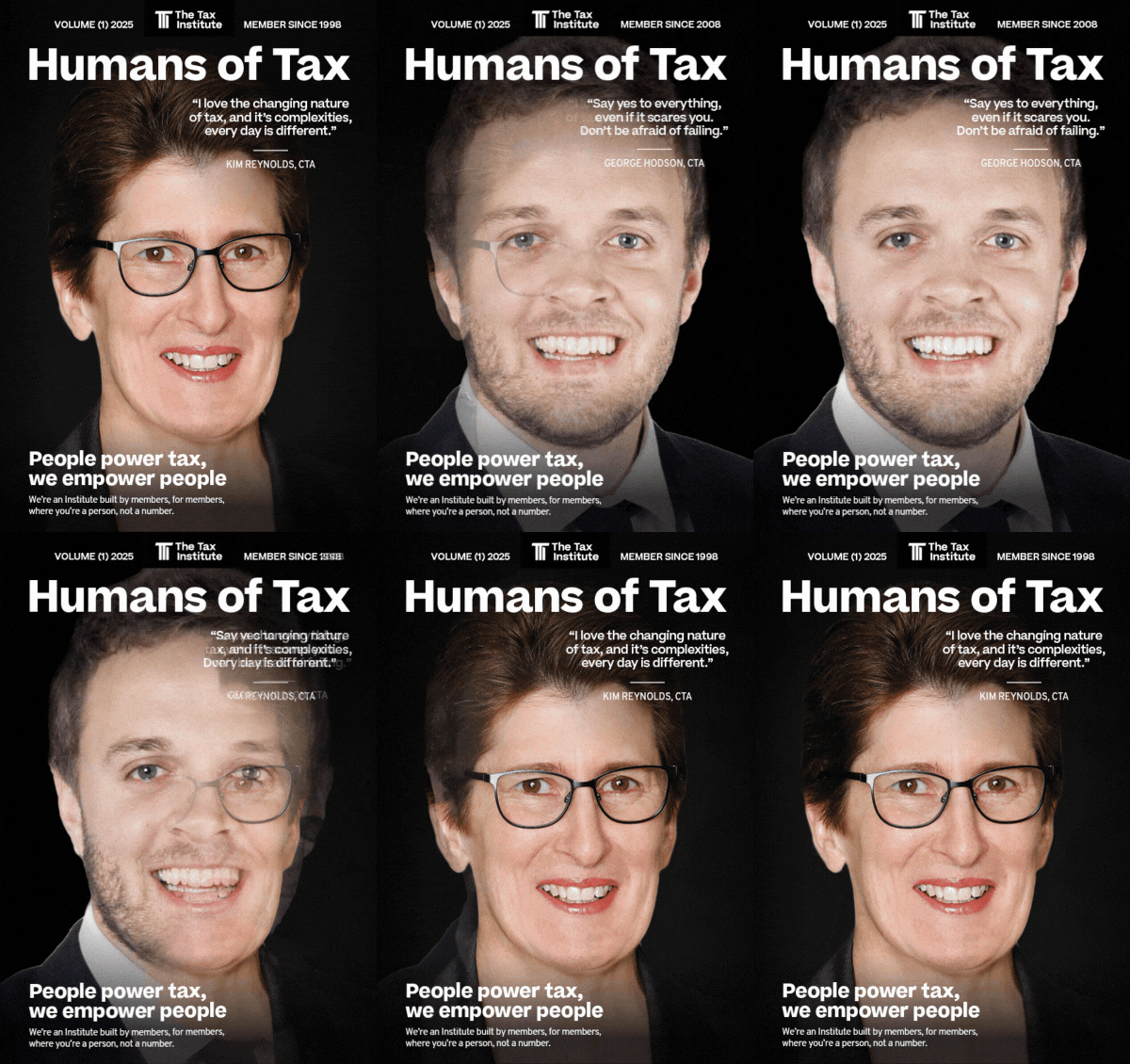
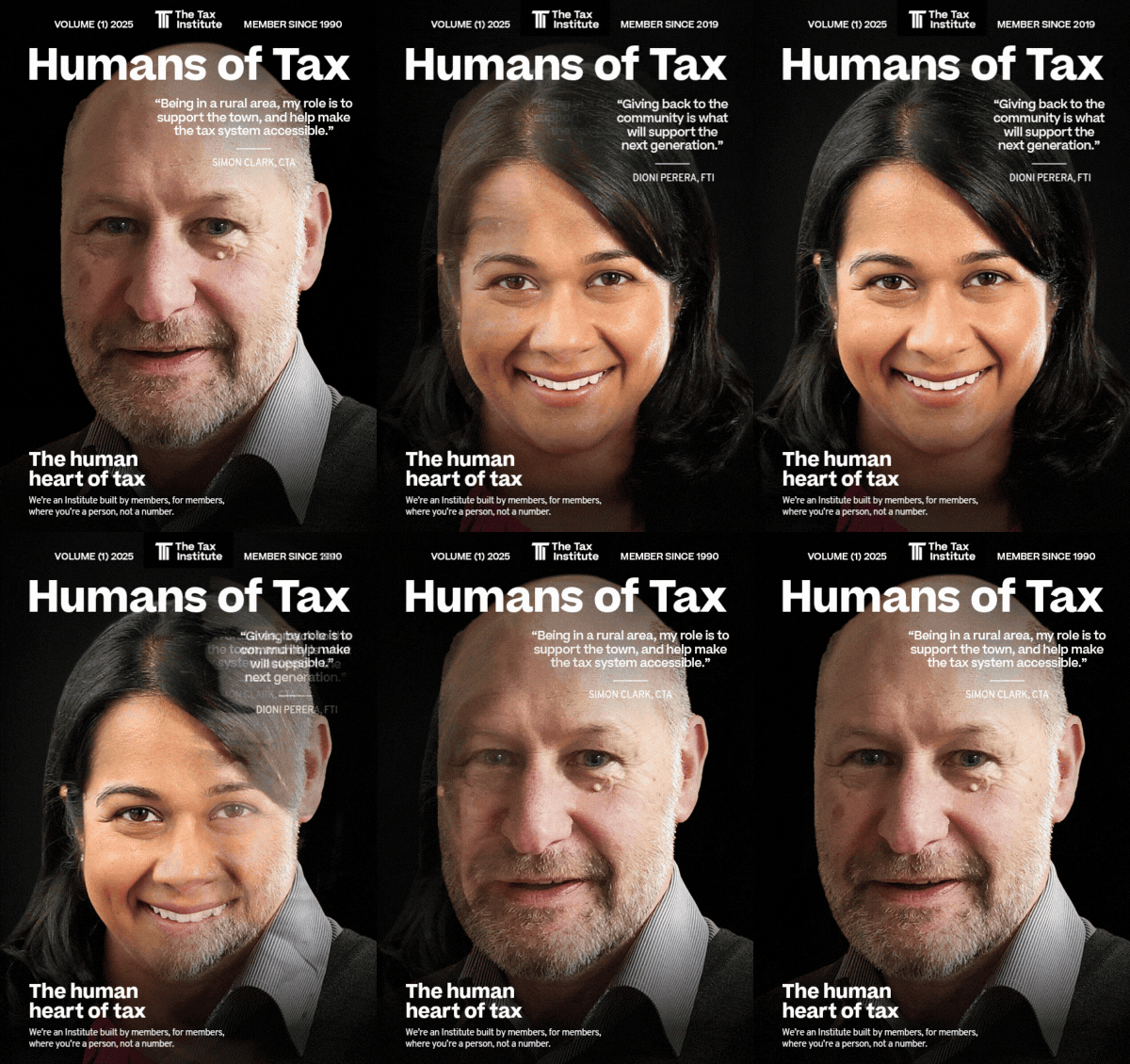
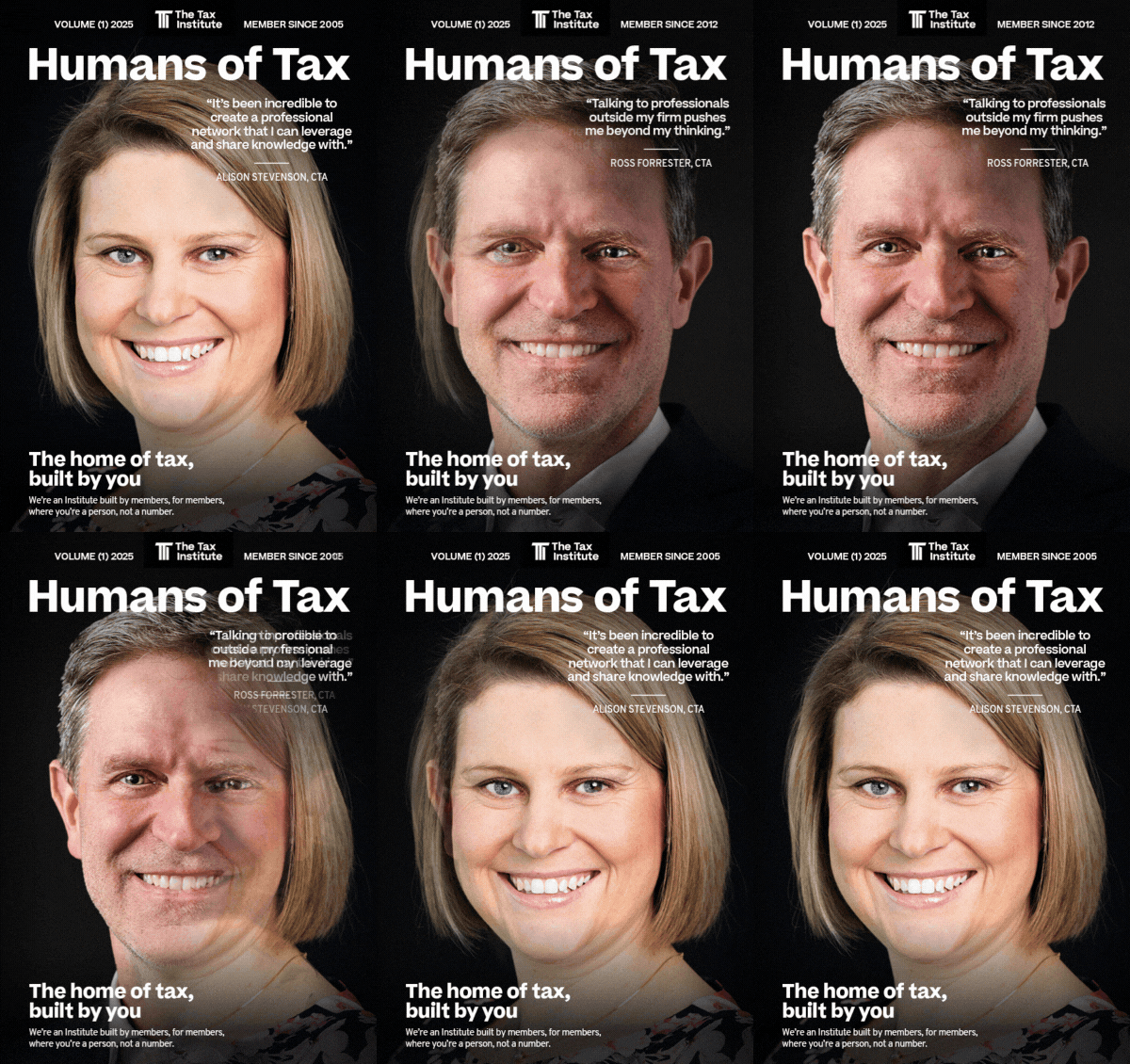
The home of tax, built by you
We're for members, by members.
These are the people who make our community what it is — the Humans of Tax.
Read their stories here.

TAS
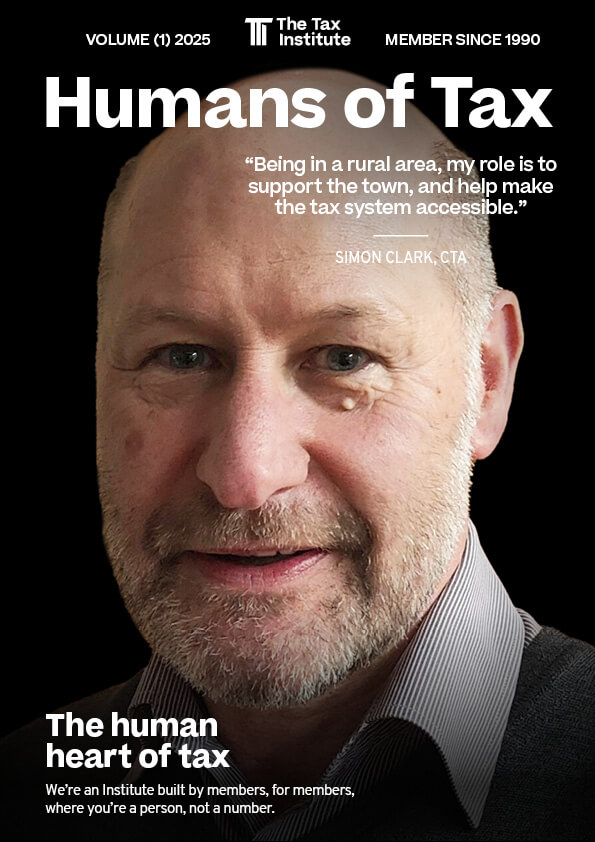
Simon Clark, CTA
QLD
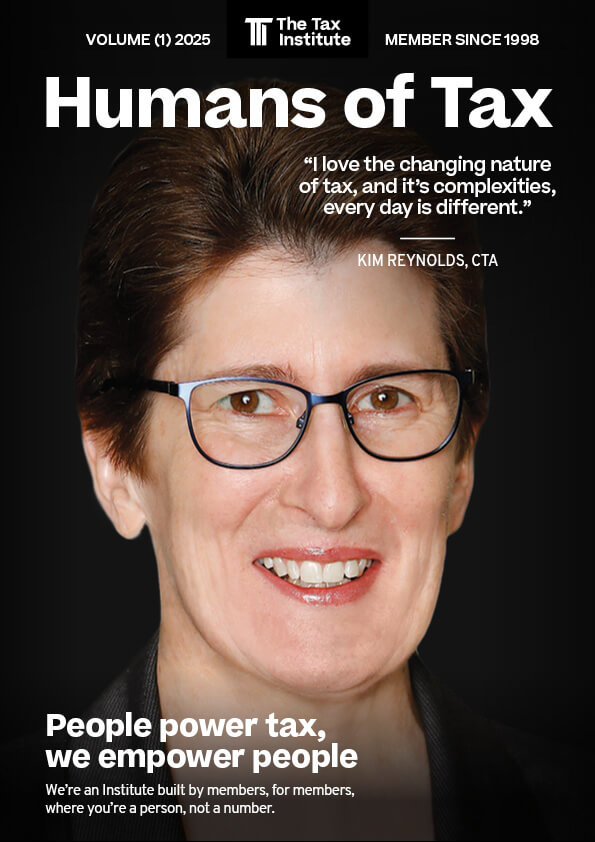
Kim Reynolds, CTA
WA
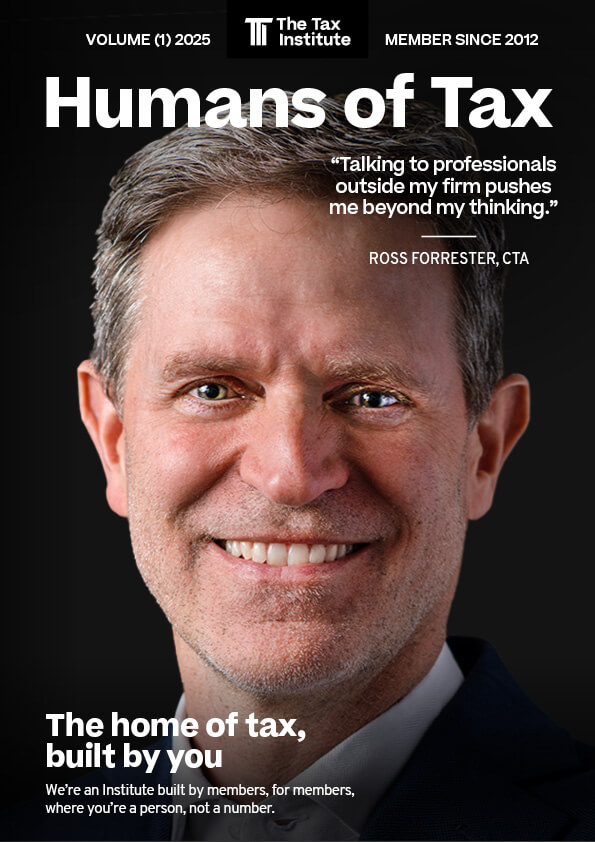
Ross Forrester, CTA
SA
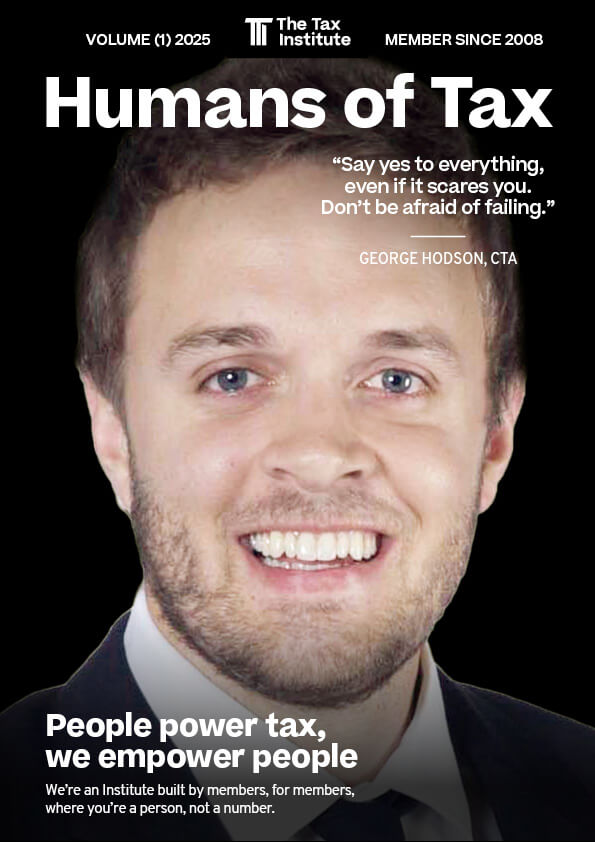
George Hodson, CTA
VIC
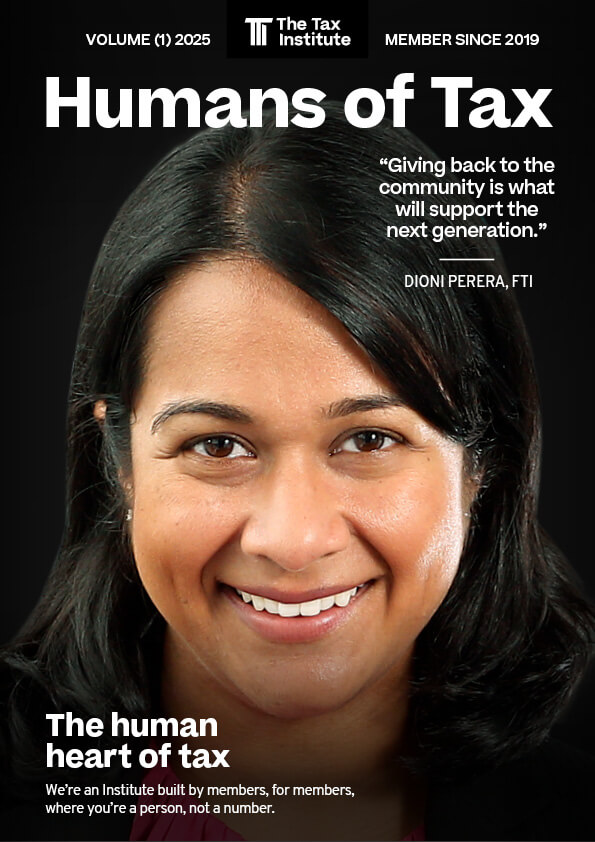
Dioni Perera, FTI
NSW
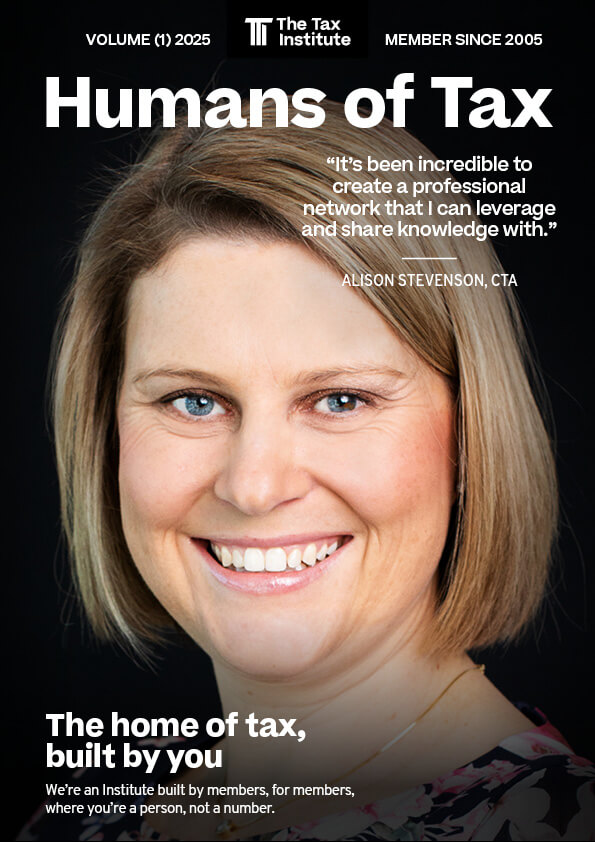
Alison Stevenson, CTA
Simon Clark: IT, introverts and the State Convention in Tassie
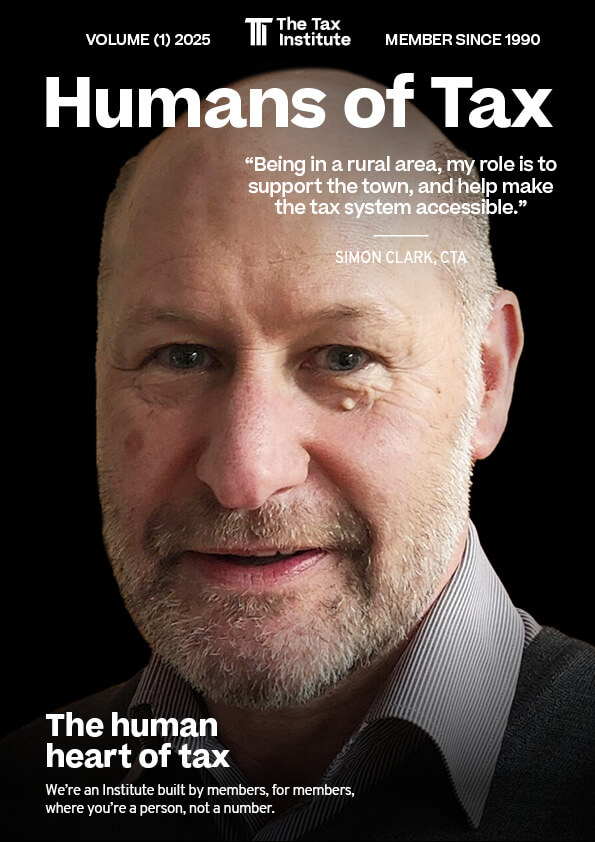
Simon Clark, CTA, is the owner and operator of Longford Business Centre in Tasmania and The Tax Institute’s State Chair for Tasmania. He has been a member of the Institute since 1990.
Simon caught up with us to talk about the Tassie tax landscape, IT troubles and why public speaking isn’t his cup of tea.
Simon, how did you get started in tax and accounting?
Why tax and accounting? I don't know… I'm buggered if I know, this was 1981! I started work January 1982 at a local accounting firm. After a couple of years, they became part of Deloitte. I didn't like the direction it went in when it got big, so I moved to another local firm.
That was the reason I got involved with The Tax Institute. They sponsored me through the CAPY and when I finished that, they told me I needed to join the Institute.
And you never looked back?
I never looked back – and now we’re having this conversation. But I wasn't a political enough animal to stay in that size firm.
I took a very small bundle of fees with me and I went into industry, working in aged care. Then both I and the Director of Nursing had a disagreement with the CEO and left on the same day. That was August ‘99, just before the GST came in. I contacted another firm to see if they had jobs going and they were looking to start consultancy on GST. So, I fronted that for them for about 18 months.
"I don't like having to charge clients for some of the work I do, because they should be able to do it themselves."
By that stage, the very small bundle of fees I’d taken with me from that local firm had grown, and I had to go full bore. We started working out of home, on the dining room table. We went visiting clients in those days – none of them came to us.
It grew from there. We cut half the garage off and turned that into an office, and then we actually rented space. Linda, my wife, came to work with me and it's pretty much been the two of us ever since.
Is Linda in tax as well?
She has a TAFE Diploma in Accounting, so she does a lot of the accounting work. I'm the lucky one who has to deal with the Tax Office – sit on the phone and deal with the portal not working!
Clients must appreciate the support that you give them with when dealing with the ATO on their behalf?
They do. There are a few that would rather go and do things like payment arrangements themselves and that's fine. Most of them, though, know that they couldn't do it themselves.
Many of my clients are a bit scared of “Big Brother” and a lot are daunted by technology. One of my issues with the tax system is that it is so inaccessible – and they're making it more so – that people without considerable education in IT can't navigate it themselves.
I'm in Longford which is a little country town outside of Launceston. It's a dormitory town for Launceston but it's also a support town for the local rural area. It's not a high socio-economic area – not a lot of Tasmania is really – and I don't like having to charge clients for some of the work I do, because they should be able to do it themselves.
There are some clients who know they can do it, but they'd rather not because they'd rather have the security of me pressing the button – that I've looked at their deductions and I think they're reasonable. But there are others that don’t make claims or anything, their tax is very simple, and they shouldn’t need to pay for help with their taxes.
I think many members agree with you on that complexity being a major issue. How did you end up representing your fellow members as State Chair for Tassie?
Six years ago I was at the Tasmanian State Convention and Craig Leighton tapped me on the shoulder and said, “Why haven't you been on State Council yet?”
When I first went out on my own, Linda and I agreed I would serve on some not-for-profit boards, rather than taking on a lot of pro bono work. So, I was on the board for an aged care facility for 20 odd years, and the charitable foundation at the school I went to, and I've been on the Launceston Royal Show board, plus a couple of others.
Between all that, I’d never had time to do more with The Tax Institute. But Craig tapped me on the shoulder at the right time, when I could get involved. So, I said, “If you think I can make a contribution, I'll come along.”
From there it was just a natural progression as I got more involved. First being on State Council, that was 2020, just before COVID. I Chaired the State Convention Committee when everything started locking down. Tassie still managed to hold a hybrid State Convention that year. I think we were the only ones who did.
And now I’m serving as State Chair. I don't know how good I am at running meetings and everything, but it doesn't seem to ruffle too many feathers.
"...it's a continual building and continual refreshing of all the little pieces of information that you need."
So, you’ve organised a State Convention, which is a big job. Have you ever been a speaker at a State Convention or any other events?
Oh jeez, I hate presenting. Back in 1999-2000 when I was working on the GST consultancy, I agreed to do it and then suddenly realised that meant I was going to have to present to people – to lots of people. I'm a life member of “Introverts Are Us”, so that didn't make me very happy.
I have taken part in a couple of panel discussions at Conventions, but public speaking is not for me.
Fair enough. So what do you love about the Tassie State Convention?
You go there expecting it to be good and it always is. Never lets you down.
It's the combination of the social side and the tax technical, I think. The fact that the two of them actually sit side-by-side. You’ll be doing a technical session then you have a have a break and it's a natural path from discussing the session to catching up with the people and how they are – people that you've seen going to the same event for 20 years.
It’s sometimes nice talking about the old days when we used to go to brilliant convention locations outside Hobart and Launceston. There was a really nice one at Cradle Mountain one year.
One last question: do you read TaxVine?
A couple years ago, TaxVine kept me sane.
There was a period of time when things were really bad in the profession, in terms of dealing with the ATO. Reading TaxVine let me know that everyone else had the same problems with the ATO and their systems. I wasn’t alone. Without that we would have felt very isolated.
When the Institute made the decision to stop publishing the member feedback I was definitely not a fan of that change. But I actually realised fairly quickly that they had made the right call at the right time, and we didn't actually need that feedback as much any more."
I always keep an eye on TaxVine to know what advocacy the Institute's working on on our behalf. I like reading the TaxVine preamble, for the same reason I like listening to TaxVibe: it's something different. They’re always topical and interesting.
When it comes to all these resources, there's always something in there. You don't always get a huge insight that changes everything, but it's a continual building and continual refreshing of all the little pieces of information that you need.
Kim Reynolds: building community in QLD and problem-solving through Lego
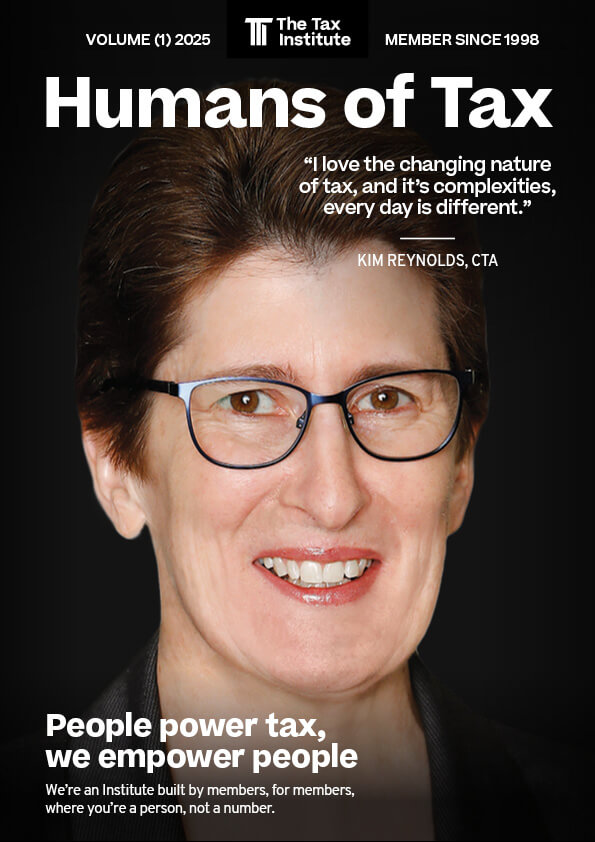
Kim Reynolds is a Director, Taxation Advisory at Vincents in Queensland. She has been a member of The Tax Institute since 1998 and is the Chair of the Queensland State Council.
Kim caught up with us to share, in her own words, her experience as a leader in the Queensland tax community, the challenges of planning an event program and the problem-solving powers of Lego.
How long have you been in tax, Kim?
Over 30 years now, which feels like both a lifetime and no time at all. I'm still finding new challenges and opportunities that keep me engaged. It's been a fantastic career choice.
"...that desire to help others develop and succeed has remained central to who I am professionally. It's shaped how I approach my current role."
How did you get into it?
I started out in business advisory, which at the time consisted mainly of general accounting and tax compliance. However, I was always drawn to the why behind things, not just what the numbers said, but what drove the decisions, how the law applied, and where the risks were. I’ve always had a strong interest in the law, so shifting into tax advisory work was a natural progression, a move I made a few years into my career.
What really keeps me engaged is the complexity, the tax law is constantly evolving, and no two situations are the same. You might be looking at the same legislative provision, but the way it applies can vary depending on the client, the structure, or the context. It keeps you sharp.
Did you ever consider pursuing a different career path?
Teaching was actually on my radar before I settled on accounting. While I never formally pursued teaching, that desire to help others develop and succeed has remained central to who I am professionally. It's shaped how I approach my current role - I find myself naturally gravitating toward training and mentoring opportunities. There's something very satisfying about watching someone master a new concept or skill.
In tax, the learning never stops, whether it's new legislation, case law, or interpretations, and then adapting these to each client's unique circumstances. I try to model that continuous learning mindset and create space for my team to grow alongside me. It's become one of the aspects of my work that energizes me most.
And how long have you been at Vincents and what does your role entail?
I've been at Vincent's for 16 years. and I'm a Director in the Tax Advisory team. I provide technical tax analysis and assistance on complex client engagements across a broad spectrum of areas, with a particular focus on the SME and private client markets.
The role has evolved significantly over time to encompass various specialised services. I handle tax advice for day-to-day transactions, business structuring, and business acquisitions and disposals. I also support clients through litigation matters and provide expert analysis for family law property settlements.
This diversity keeps the work engaging and allows me and my team to develop expertise across multiple intersecting areas of tax law.
And alongside all that, you volunteer your time for The Tax Institute. Why is volunteering with us important to you?
It's fundamentally about contributing to the broader tax community and supporting fellow practitioners. The Tax Institute sits at the heart of our profession, bringing together people who share a genuine passion for tax - whether they're accountants and lawyers in public practice or in an in-house role. I'm committed to fostering that sense of connection and showing others that there's a whole community of people who find tax as fascinating as they do. It's really about building relationships with people who speak the same "tax" language and can also serve as a trusted sounding board when you're working through those particularly complex issues.
Currently, I serve as Chair of the Queensland State Council and on the organising committees for both the Noosa Tax Convention (co-chair) and the QLD Tax Forum (chair). Over the years, I've also contributed to the Professional Development Commitee and other event organising committees. These roles offer a unique opportunity to explore what's topical in the profession and collaborate with others to address the issues that matter most to advisers. It's fascinating to gauge the hot topics and understand the challenges advisers are facing across the profession.
The experience has also given me tremendous respect for the complexity of planning for these events. There's an art to curating content that's both technically rigorous and practically relevant, and I find that collaborative process incredibly rewarding.
"It's fascinating how your mind works
when you're focused on something tactile like that.
I'll be working through a build, and suddenly a solution
to a work problem I've been wrestling with will just emerge."
I imagine it gets tricky trying to pull together a program that covers relevant topics in a field as wide-ranging and complex as tax?
Absolutely. Program development requires strategic foresight and considerable flexibility. We start planning months in advance, but the tax landscape can shift rapidly - an issue that seems peripheral early in the process might become critical by event time, or major policy announcements can completely reshape the conversation.
We've experienced this challenge firsthand with both Noosa and the QLD Tax Forum, where significant developments have emerged just days, or even hours, before a scheduled presentation. It means we must build adaptability into our programs from the outset, keeping an eye on emerging issues while anticipating what will truly resonate with attendees and provide practical value in their daily work.
The goal is to deliver content that remains both timely and engaging, even when unexpected developments arise. It certainly keeps us on our toes, but that responsiveness is exactly what makes these events valuable to practitioners seeking current, actionable insights they can apply immediately in their practice.
Ok, so what do you do outside of tax?
Reading feeds my natural curiosity - while some of it connects to work, I love diving into diverse fiction and non-fiction topics. I also enjoy watching movies and, perhaps surprisingly, I really enjoy constructing Lego, particularly Star Wars themed, sets.
How did you get into Lego?
I've always been a Star Wars fan, and when I discovered the themed Lego sets, it seemed like a natural fit. Building a Lego set can also be quite therapeutic. There's something genuinely relaxing about working methodically through a complex build - it allows my mind to unwind.
How so?
It's fascinating how your mind works when you're focused on something tactile like that. I'll be working through a build, and suddenly a solution to a work problem I've been wrestling with will just emerge. I find that stepping away from actively trying to solve something allows my subconscious to work it through. The answer often becomes clear when you're not forcing it.
Ok, last question. Tell me about your time as QLD State Chair and what you're hoping for the QLD tax community in the future?
I've served as Queensland State Chair since 2024, and have been part of State Council for nearly six years. What I find most rewarding is witnessing how our team collaborates to identify what matters to members - it keeps us connected to the profession's pulse.
Looking ahead, we're focused on deepening member engagement and creating fresh connection opportunities. One initiative I'm particularly excited about is the Augustinian Tax Discussion Group, that we have established over the past couple of years. It provides emerging tax advisers - both lawyers and accountants - with a dedicated space to connect, learn, and exchange ideas, with peers in a relaxed setting.
While Brisbane has a couple of established tax discussion groups, these tend to include more experienced practitioners, the Augustinian Group fills an important gap for the next generation. The response has been overwhelmingly positive, and watching these emerging practitioners build their own professional networks gives me real optimism for Queensland's tax community moving forward.
Ross Forrester: building 27-year client relationships in WA
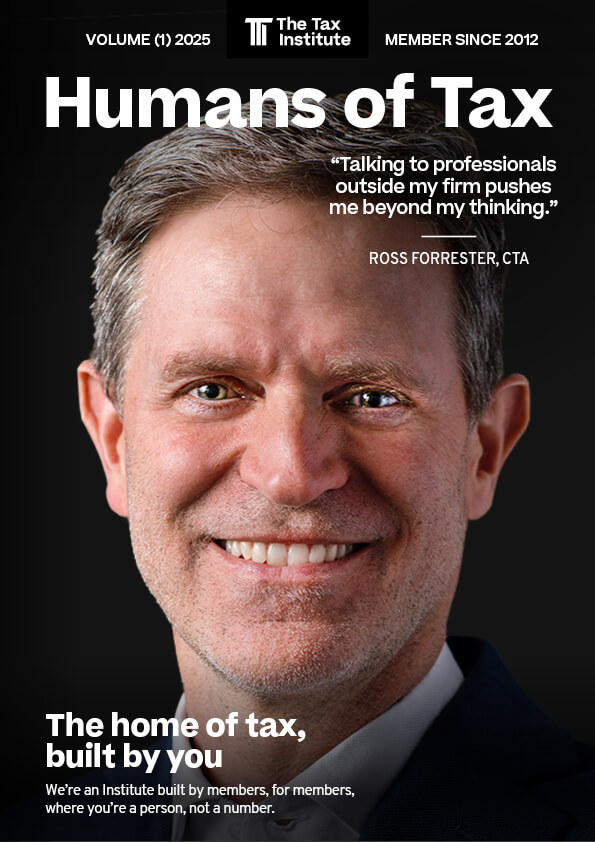
Ross Forrester is the Founding Partner at Westcourt, a family business accountancy firm in WA. Ross has been a member of the Institute for 13 years and is the State Chair for WA.
Ross took some time to chat with us about the incredible value of networking outside your circle, how far a focus on adding value can take you and what it means to build client relationships that span decades.
Alright Ross, first question: how did you get started in tax?
I was originally recruited as an audit junior in a large accounting firm while I was working part-time through university. But I didn’t really like it — I got bored. I was then transferred to liquidations, and I didn’t like that either.
Eventually, I got transferred to tax. I was running out of places to get transferred to, and that’s how I ended up as a tax professional.
Third time lucky. And now you’re the WA State Chair for The Tax Institute. How did that come about?
I think it's important to give back to my community at both a personal level and a professional level.
At one stage I thought, “well, I've been successful because of my professional , but I haven't really given back in some way.”
That's what prompted me to make a call to The Tax Institute and say, “how can I contribute?”
I originally joined the State Technical Tax Committee. I said a few things, contributed there and ended up becoming State Chair of that committee. I was then invited to join State Council.
I just then focused on ensuring that State Council made a difference and contributed — that we're doing things better every day and we're adding value for the Tax Institute members.
So, it wasn't a deliberate plan, but that focus on constantly improving and getting better at every step has led me to taking on the role of State Chair.
"Hearing how other people think, act and deal with a particular matter always makes me better, and that's what I find special about networking with other professionals."
And we’re glad to have you! What advice would you give to young and aspiring tax professionals looking to build their career?
The most important thing I would say to tax professionals is to keep challenging themselves, technically, personally and professionally.
If you are only networking within a very small group or your only networking within your own firm, you can end up with group-think. You need to talk to multiple professionals outside of your network and comfort zone to challenge you, to stretch you beyond your current thinking. Sometimes someone's viewpoint can even be the same as yours, but they present it in a different way, and you will learn from that experience and become a better practitioner
That's where The Tax Institute is valuable — to get access to people outside your network, outside your firm, outside your state, with a different view or a different approach. You stretch your own professional boundaries to generate better value for your clients.
That’s a great outlook. What’s your fondest memory of networking with the Institute’s community?
One of the fondest memories I've had is meeting Rob Sceales, CTA, from Sceales Lawyers. I found him an incredibly generous and kind person. His knowledge was impeccable, and his honesty and transparency was really moving. Meeting and talking and engaging with Rob really changed the way I view a lot of things and it gave me confidence in how I operate
If I wasn't involved in The Tax Institute, I wouldn't have had the opportunity to meet him like that.
Do you remember where you first connected with Rob?
I first connected with Rob when meeting over a mutual client. But in that professional environment it was very client focused, and we did not engage with each other as people
It was at WA Tax Forum that I actually had the opportunity to meet with him outside a professional environment. Having the opportunity to engage with him and talk to him without a client purpose was really very enlightening.
I have had the opportunity to meet so many great people, but Rob was memorable.
So, networking is obviously important to you professionally. What do you think is special about the WA tax community for networking?
I don't know what's special about the WA tax community compared to other tax communities — I would assume that the people in Melbourne are a nice bunch too!
I do find that going to events and meeting people always makes me a better practitioner. Hearing how other people think, act and deal with a particular matter always makes me better, and that's what I find special about networking with other professionals.
It's not all about networking to try and generate more money from clients. Some tax advisors think that networking with other tax professionals is pointless because they're not going to make you money and send you clients, but you become a better professional because you understand more.
Also, inevitably with larger clients and wealthier clients, they don't just deal with one tax advisor . They always have multiple interests, businesses, and investments with a range of people, so you deal with other tax professionals. If a client is doing something with their business partner there's another tax professional helping that business partner. The business joint venture is easier when the two tax professionals trust each other and they feel confident in talking to each other.
You started your own firm, Westcourt. What prompted you to go out on your own?
Yes, I'm the Founding Director at Westcourt. I started the practice 27 years ago and we've now got four partners and employ about 20 people. Watching the practice grow over a long, gradual process has been deeply rewarding.
I felt that I was naturally drawn to helping families in business. Previously I was in corporate tax at an international firm and I didn't feel I was making a difference or an impact on anything.
We're purely a tax advisory firm with a particular, single market focus. We don't do retail tax, we don't do ASX listed or public company work, we are not investment advisors, and we don't do audit. We focus on supporting families in business.
Making a direct impact on someone's life over a very long period of time is deeply rewarding. I'm an adviser, so I can only really impact somebody at best, say, 1% a year. But if I can make someone's life better 1% a year, and I can do that consistently over 20 years and I compound and retain that 1% incrementally, you do end up making a significant impact on people later on.
"While I am focused on helping my clients, they've helped me in return far more than I have helped them."
Spoken like a true tax adviser. Do you have a lot of clients that have been with you long-term?
Yeah, we've had a lot of clients with us for a very long time. I think my first five clients are still with me, or their kids are still clients
As a tax professional, the value that you generate for your client often increases the longer the relationship with that client. If you're just doing a three-month transaction, you don't have an enduring, ongoing benefit. But if you're looking at that incremental compound return of a very long period of time, you can make a huge difference.
For example, you've got records as to why you made a decision and the purpose of a transaction many years ago. How do you know that asset is still a pre CGT asset? Well, you've got records and information and a history of the asset that you've retained over an incredibly long period of time. So you can prove it's still a pre-CGT asset and you've got a deep understanding on the history of what happened and how it has been dealt with as tax law has evolved over time.
That history and knowledge of what's going on with the client becomes critical when you've got a material life changing event. For example, if the client is selling the company, or retiring, it's amazing how much all these little events, that look small in isolation, build up and become critical when looked at holistically.
Having that information and history is valuable to our clients in moments of high stress where large amounts of money are involved. If you’ve done your job right, you can deal with that high pressure environment effectively, as opposed to chaos and worry.
That kind of chaos happens where you've got clients who bounce around from advisor to advisor every two years. It's extraordinarily difficult to generate value because there's no real deep, rich history with the client.
It must be satisfying to build up that client relationship and provide that kind of support?
It's not a transactional relationship. It is a human relationship, and I enjoy that.
While I am focused on helping my clients, they've helped me in return far more than I have helped them. My clients are smart, intelligent, successful people and they pay me to listen and understand how they manage their money and run their business. They've taught me so much in life and made me a better person . That's been quite a privilege.
Alison Stevenson: small business, family planning and building your professional network
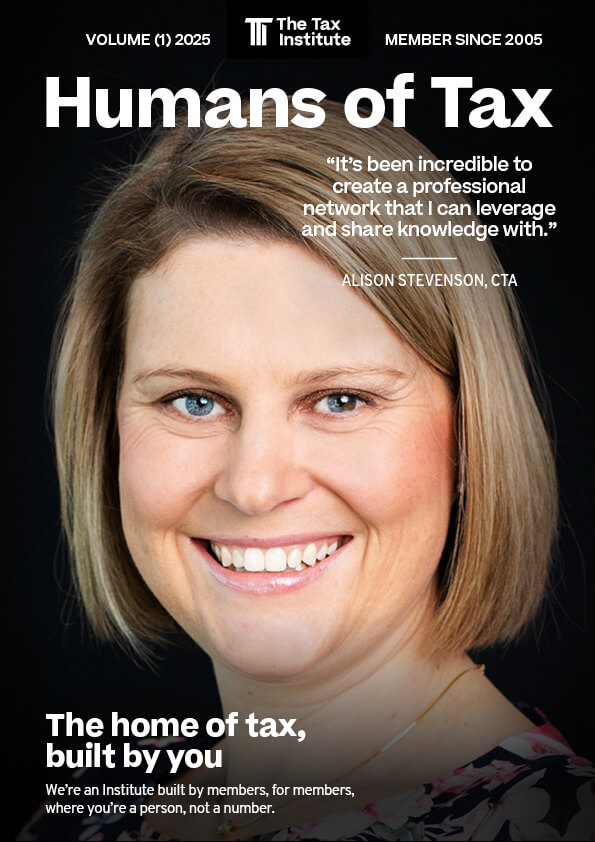
Alison Stevenson, CTA, is Head of Tax at Matrix Norwest and The Tax Institute’s State Chair for NSW. She has been a member since 2005.
Alison caught up with us to chat about how the tax industry has changed for women, her journey as a small business owner and tips to build your professional network and confidence.
So, Alison, how did you get into tax?
Like many people in tax, I fell into it! I was doing a law degree at Uni and working in an accounting firm as an undergraduate. It was 1999 and when nominating electives at Uni I picked GST as a subject as it was becoming a really big thing and being discussed in the media. Whilst not an area I would profess to be keen to study now, at the time I found it really interesting.
A partner in the accounting firm I was at encouraged me to work in this space, in particular due to my law studies. I chose law because I don't typically see the world in black and white. I like to see the shades of grey and understand all different perspectives. Different to traditional accounting which in my experience is much more black and white.
Speaking extremely broadly, I think tax is a great niche area for both accountants and lawyers to consider. I believe a law degree teaches you a way to approach problems and think. This gives a great edge in the tax profession. Having a basis from working in accounting provides you the commercial and practical insights needed in the tax profession so a great balance.
"...tax practitioners, on the whole, are very generous
with their knowledge and time.
Everyone's really engaged with enhancing the profession,
and sharing knowledge."
You're a small business owner now. How did that come about?
Our business was started by my husband in 2006, initially specialising in self-managed superannuation which was his niche area. I was working in a mid-tier firm in the tax team, commuting into the city from North West Sydney.
After two small children arrived, we made the decision for me to join the business and broaden the offering to accounting and tax.
At that point, work from home and flexibility of hours was not really on offer anywhere. We wanted to be able to provide service to clients at a high standard, but have the flexibility to raise a family.
That was 15 years ago so time does fly. We now have three teenagers, my husband is running our Financial Planning business, we have business partners and 23 staff.
What are the good and bad sides of having your own business?
I love being in control of the way we service clients and my workday. We started the business as we are really passionate about helping people achieve, and we still get to do that every day. I enjoy empowering and guiding our staff and whilst the world has caught up in offering some flexibility, its great being able to control my workday.
The bad side is you never switch off. Ever. You're on 24/7.
Have you learned any techniques that help you switch off when you need to, or are you still looking for those?
I’m still looking and at this time of year, I feel like I’m failing to switch off. Although, I imagine most of our profession feels like that in June. I block out time in the diary and sometimes intentionally leave the computer at work, but switching off is definitely a work in progress.
An adviser asked us when we had time blocked out for holidays in the diary, they said this should be the priority not an “after-thought”. This was a game changer, and we make sure to block out a few weeks a year for some time-out.
What do you do when you’ve left your computer at the office and you’re not working?
I mainly just run around after three teenagers. Like many parents of teenagers, we are the “unpaid Uber driver”. It’s important to be present for them and between work and them currently, there’s not an awful lot of time left.
I have over the years assisted in local events and not-for-profits and this is definitely an area I can see enhancing into the future. With time-out now locked into the annual calendar, travelling is also back on the list and something to plan and look forward to.
So, what was your introduction to The Tax Institute?
I was lucky to work in a team where the partners, Andrew Noolan and Greg Travers, were heavily involved in The Tax Institute and encouraged this from all team members.
I think it’s really important for us to encourage the younger generation coming through, I would say most of our members are referred to The Tax Institute, rather than finding it themselves.
My involvement started with the Monthly Tax Update, breakfast Clubs and The Membership Committee.
You're State Chair for NSW now, so you’re still very involved with the Institute. You’re still finding value in it?
Being an active member of TTI not only has enhanced my professional technical ability but substantially added to my professional network.
As a small business owner I think the Institute has also been incredible in creating a professional network that I can leverage off. I've received some of the best referrals for clients through other professionals at TTI and also been able to add additional coverage and provide the best advice for existing clients where I need to. I believe that there is also an element of credibility to yourself and your firm that is an additional benefit.
As the State Chair for NSW, I think that it’s important that the views of our SME members are heard and represented. I would recommend The Tax Institute to anyone in small business for many reasons, not only the exceptional technical resources and events that are available but to get actively involved and build your network.
After many years with TTI, I have a long list of other professionals that I can pick up the phone to. It could be talk through a technical matter, or just talk the pressures of the day we all deal with. Being a small business owner can feel isolating sometimes, its important to build you network.
Refreshingly as well, tax practitioners, on the whole, are very generous with their knowledge and time. Everyone's really engaged with enhancing the profession, and sharing knowledge.
Other professionals can sometimes be “closed” or have little time to assist, but the TTI Members on the whole are definitely not like that in my experience. They're very embracing of everyone else in the profession. They want to make the whole profession better. They want to upskill everybody to share the workload because the workloads large and that's well recognised.
TTI helps with not only creating a professional network , but also can help build your clients.
"You're not expected to know everything,
but when you are in the early stages of your career,
or early stages of presenting,
you feel like you should know everything."
You mentioned that you made a big career change after starting a family. How do you think the tax profession has changed for women over your career?
When I first started, there wasn’t many female Partners or senior managers around. Whilst I worked with some great leaders, there were few who understood the challenges facing women trying to raise a family and climb the corporate ladder.
We have come along way from this in the past 20 years. I think COVID, the world of online meetings and explosion in technology has supercharged change in the past few years.
Not long ago, I was on a Teams meeting with a group of professionals working collectively on a commercial transaction. One of the men on the call said, “Excuse any unusual noise in the background, I've got my 3-month-old here with me”.
That just didn’t happen 20 years ago.
So, do you think we really can “have it all” these days?
From what I’ve seen, you can have it all if you're motivated. It’s hard to juggle any career and family, but it's definitely achievable.
You facilitated a fireside chat with Julie Bishop at The Tax summit last year. How was that?
That was a career highlight for sure. When initially approached, I wasn’t aware of who I would be interviewing. Once I found out, I was even more excited as I had followed Julie’s career for many years.
I did research and was nervous about keeping the flow. I hadn't done that interview style of presenting before, where it's just one-on-one, however Julie was definitely a professional.
You did an amazing job. What advice do you have for people wanting to develop their presenting skills?
Practice and confidence. I don’t think we speak enough about confidence and how you actually become confident. Practice is one thing, without friends, family and within your own firm. Even the basics though, eye contact, a good handshake, voice projection, they are all important and help you.
With public speaking, I encourage people to practice on topics you're really comfortable with first. Once you get the hang of this, then branch out into small groups, then larger. There is something particularly daunting, but also exhilarating, about presenting on a technical subject toa room full of professionals.
Part of the skill is having the confidence to say “I don't know”. This applies not only to presenting, but also being in any professional environment, whether colleagues or clients. It’s okay to say, “I’m not sure, but I will find out and get back to you”.
You're not expected to know everything, but when you are in the early stages of your career, or early stages of presenting, you feel like you should know everything. I think this turns a lot of people off wanting to present.
In our firm, we organise at least twice a year, an opportunity for people to present to the other staff. Every position, whether professional or support staff. The topic is almost irrelevant, it's all about confidence and practicing talking in public and engaging an audience.
What direction do you think the profession needs to be going in the future?
As a profession, I think we need to improve the regulatory strength of the profession.
In a lot of the old legislations with ASIC or with different accreditations, there's a lot of other professions on the list. Tax is not on those lists.
I also think that a lot of tax professionals could be going through the CTA program. It is a really great program. I think we should grow its credibility, so it’s seen as just important as CA or CPA or the Law Society.
Tax, when I started was predominantly lawyers or accountants “doing tax”, however the profession has grown. Tax is a profession now in its own right, and one that I am proud to be a member of.
George Hodson: networking, public speaking and a chicken called Pizza in SA
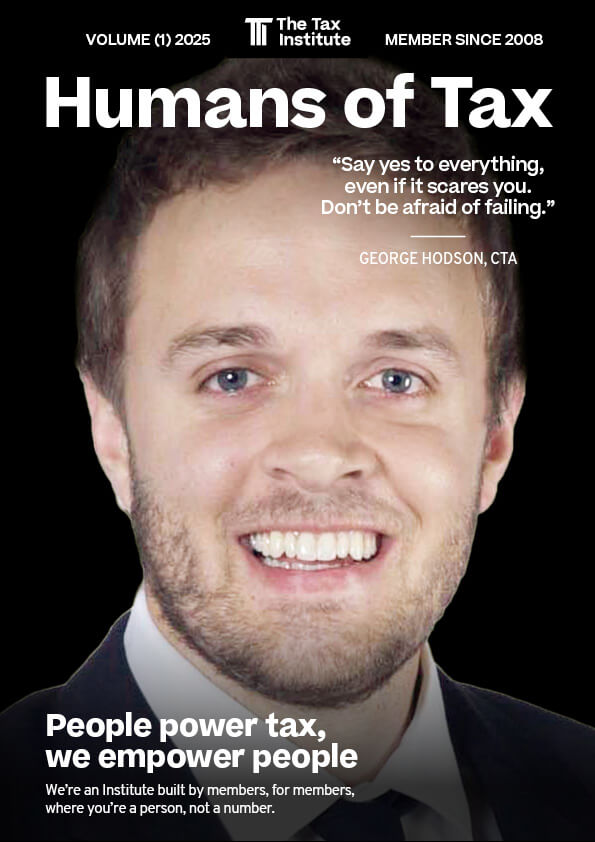
George Hodson is a Partner at Thomson Greer and has been a member of the Institute since 2008. He is our State Chair for South Australia.
George sat down with us to chat about the SA tax community, his plans to make sure young tax professionals have opportunities to grow and connect, and his flock of exotic, food-themed chickens.
How did you get started in tax?
How did I start in tax? By accident basically.
I had moved back to Australia from Canada in 2007 and one of my friends worked at a law firm that was then known as Thomson Playford (which is now Thomson Geer). He encouraged me to go for a role there – which I only later found out was because he was getting a referral bonus.
I had no idea about tax, and I wasn't that interested in law. I was much more interested in numbers and was considering something in finance.
This was pre-GFC, so jobs were more plentiful. So, I think it was right place, right time for me. They basically hired me on the spot. At the time I thought I would give it a go for a while and then move on to something else, but it's been nearly 18 years and I’m still here!
It's so interesting how many people found tax by accident. What is it that made you stay in tax, do you think?
I always liked problem solving as a kid – puzzles, things like that. I found tax was a one of those areas where problem solving is front and centre. If you're getting questions, it’s likely because pretty smart people don't already know the answer. Which means the answer is rarely straightforward.
Tax (at least for a lawyer) is also not repetitive in ways that other parts of law firms might operate. Some other practice areas might do very similar things all the time, whereas the work I do is completely unpredictable and usually quite varied, which I have always enjoyed.
"Presenting is not for everyone, but if you are interested in doing it,
I would say that is one of the best things that a tax professional can do with The Tax Institute."
What do you do when you're not working in tax?
Well, Emily and I have three kids, a dog and a bunch of chickens. The oldest child is 6 and the youngest is 1, so pretty much full-time chasing them around when I’m not at work. Ideally, I'd like to say fishing and sport, but that is now more ancillary than what it once was before children!
You know, you are not the first person I've interviewed who has chickens. Tim Sandow, our President, also keeps chickens.
Does Tim have chickens?
Yeah, he does.
How many does he have?
Oh, I don't think he said, but he was building a chicken coop for them.
He's in the Hills, so he probably has more than me, but for a suburban area that we live in, we have quite a few.
How many do you have?
We have 10, but they're all different types of breeds, because the kids chose them. And of course, they all chose completely random ones. So, there's a smattering of normal chickens in there and then there's these other, quite exotic ones.
Do they all have names?
Yes, but their names are also quite fluid. Initially our 6-year-old named them after my wife's sisters and other members of our family, and that didn't go down particularly well. I was quite comfortable with it.
She subsequently named them after her favourite foods. So, there's Pizza and Ice Cream and Doughnut. But I think it depends on which day you ask as to what chicken is actually called what.
There isn’t a chicken called Nuggets is there?
No, they're all the completely human names or food that's not chicken related.
Well, now that we’ve covered the important topics, can you tell me about the impact the Institute has had on your career?
The Tax Institute helped me develop my profile quite rapidly. I initially received quite a lot of advice from partners at Thomsons and professionals outside of the firm to get involved in attending Tax Institute events and presenting where possible. Presenting, in particular, is an effective way to build a profile in areas you might be interested in.
I started doing that and presented not just with The Tax Institute, but with any opportunity that came my way on various things from quite early on in my career.
The Tax Institute is very good at giving that platform and opportunity to young practitioners. I remember I got an opportunity to present at the National Tax Convention when I must have been around 30.
They were happy for me to present on employee share schemes in front of 400 people or so, which was certainly the largest group I'd ever spoken to at that age for sure.
Was that nerve wracking?
I've never really gotten nervous talking to people. But I still remember at that event the light on me was so bright, there could have been one person in front of me, or there could have been 10,000. It wouldn't have mattered because I couldn't actually see until they turned the lights on afterwards!
But the number of people didn't really worry me. The thing that I always worried about was not knowing as much as other people. I would spend months preparing for those presentations and going through every single word I'd written about everything that I was going to say and vetting it and verifying it again and again.
It was a good opportunity for people to get to know some of my practice areas. The amount of phone calls that I would get from people over the years who would say they'd see me at an event or read a paper I'd written – when I’ve never met these people – was quite surprising.
I didn't really appreciate that element until it started happening. I’d been told it's a really good way to build a profile and at the time I thought, “okay, I'll just do that and keep my boss happy”. But they were not wrong. People still call me, and I've had people call me from overseas markets who have found me and said, “You’ve written this paper or someone said they saw you present on this”.
Presenting is not for everyone, but if you are interested in doing it, I would say that is one of the best things that a tax professional can do with The Tax Institute.
And now you’re the SA State Chair for The Tax Institute. How did that come about?
I joined a technical committee about 12 or so years ago and then once you're on one committee, you generally get pulled onto others!
I've been on the Barossa Organising Committee on and off for quite a few years and I've been on State Council for a number of years now as well. That's just a natural evolution of going from one committee to the other and trying to help the local tax community.
It’s good to be involved in organising events and getting an understanding of what people in the tax community here want. If we can get that right, then people are going to rock up at events, people are going to meet more people, and more opportunities come from that for everyone.
"Say yes to everything, even if it scares you.
Don’t be afraid of failing. Once you find something
that really interests you, stare down the challenge and embrace it."
How is the networking in SA?
In some respects, Adelaide is like a reasonably large country town, you do bump into everyone everywhere. The community is very collegiate and other professionals are always happy to go out of their way to help or make introductions to people that you might not know which might facilitate something you're working on. I'm not sure that is as common in other jurisdictions, from what I've experienced.
You mentioned the Barossa Tax Convention, why should people go?
The Barossa convention has been around for as long as I've been practising and has always been in the calendar as a priority event to attend for our team at Thomsons. It's been something that we've been very keen to support and will continue to do so. That's generally the view of a lot of accounting and law firms in South Australia.
Even if you're not there to necessarily learn a lot, it’s a great opportunity to hear about something outside of your practice area, catch up with colleagues and meet new members of the profession. It's also a great opportunity for younger professionals to meet people who they might not ordinarily get the opportunity to meet in their day-to-day work.
As State Chair, what are you hoping to achieve for SA in the future?
The number one thing I want to do is boost engagement of our younger cohort in SA.
I was very fortunate when I commenced practice in 2007 that there was a very strong pull from the more senior members in the profession at the time to make sure younger professionals, whether it's accountants or lawyers, were involved in The Tax Institute in various ways.
As State Chair, I want to make sure that younger members of the profession continue to get the same opportunities that we did. I once asked a barrister I was working with on a matter (who now happens to be a High Court judge!) why he had agreed to present at a session for the Tax Institute that I was organising and he told me that he thought it was important to give back, as he wouldn’t have gotten to where he was if other people didn’t do the same for him. I share this sentiment entirely. But for the record, I have no desire to become a judge!
I'm currently working on building a young professionals group for the Tax Institute in SA, which I'm going to get off the ground this year. We're going to provide some engagement opportunities for those new members to connect in a technical and non-technical sense.
That’s exciting, I look forward to seeing more about it.
I'm getting there. I've got a wine sponsor for it now. So, the important stuff is ticked off.
If you could give some advice to those young tax professionals, what would it be?
I give this advice to our junior lawyers as well. Don't say no. When you are just starting out, you have to say yes to everything. Even though you might think you don't want or need do something, or that you’re not going to be good at something, you don't really know until you try it.
I think a lot of junior practitioners fear failure and are therefore perhaps less interested in trying new and different things. Tax is one of those areas that I think scares people – probably fairly a lot of the time – but I’ve met a lot of people that have been successful and have stories very similar to mine. They gave something a shot that they had no idea about, and it turned out they were okay at it.
Say yes to everything, even if it scares you. Don’t be afraid of failing. Once you find something that really interests you, stare down the challenge and embrace it.
Dioni Perera: building networks and giving back to the Victoria tax community
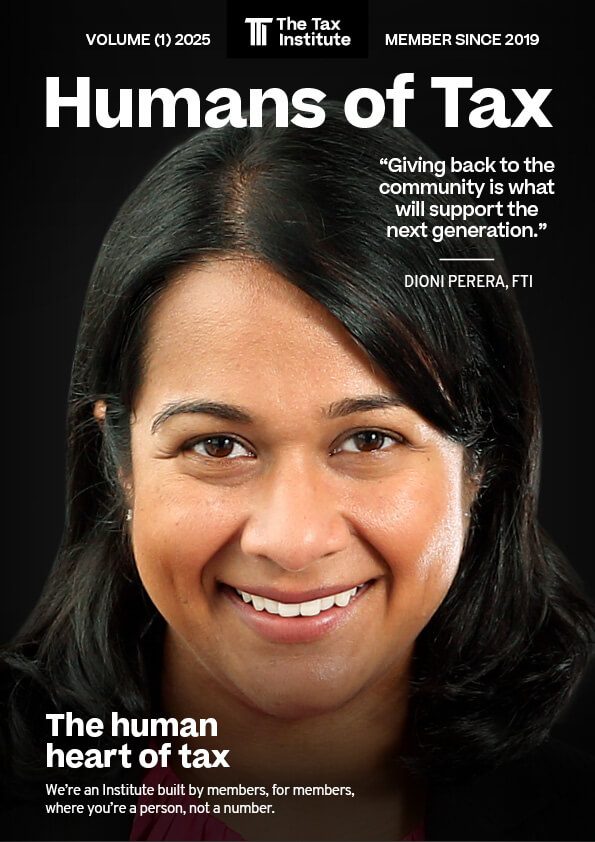
Dioni Perera is a Partner and lawyer in the Tax Law and Tax Controversy team at EY in Melbourne. She has been a member of the Institute since 2019 and serves as the State Chair for Victoria.
Dioni shared her thoughts with us about helping the younger generation of tax professionals to create networks and the importance of taking the leap – even when it’s scary.
Tell us about your tax career so far. How did you get started, and how did you end up where you are today?
I effectively fell into tax as a graduate. If you had told law-student-Dioni that I would become a tax lawyer, I would have laughed. Tax was the furthest thing from my mind when I was in my uni days.
"There are so many tax professionals involved with the Institute and it's been really great to give back more broadly to the profession."
What happened was, I went into the traditional law firm in a graduate role and rotated through various teams, and ended up really enjoying the tax team and the work that we did.
It covered not just the tax law technical work, but a lot of other related areas of law. So, I guess I accidentally fell into tax and tax disputes and ended up loving it quite a lot.
I've been in the profession now for nearly two decades. I came up as a specialist in tax controversy and tax law and as I was building my career, I really benefited from the people who mentored me. Some very senior practitioners really took me under their wing when I was a junior.
Now, I want to do that for others. It's about giving back. The Tax Institute and my work at The Tax Institute has really assisted with that, because I've been able to not just give back through the firm that I work with and the juniors that come up through that firm but also have a broader reach.
There are so many tax professionals involved with the Institute and it's been really great to give back more broadly to the profession.
Are there any notable cases in your career that we’d recognise?
My practice focuses primarily on large businesses and multinationals, so I am a tax lawyer that helps large taxpayers navigate their complex tax disputes. The majority of the client cases I’ve worked on have actually been resolved in a non-public manner, through ATO engagement, settlements and other alternative dispute resolution processes.
I cut my teeth on the BHP litigation around bad debt and financing issues. That was when I was a first year lawyer.
Since then, I have also run litigation for Victoria Power Networks, Orica and Chevron.
You’ve been involved with the Institute for a while now. What was the journey to being State Chair for Victoria like?
My first ever interaction with The Tax Institute was when I was a second year at a law firm and went to the Young Tax Practitioner series. One of the leading partners of Deloitte presented on Division 7A and I just learned so much. I hadn't come across it in my practice up until that point in time. I remember thinking, “wow, this is very high quality”.
So, I got an introduction to the Institute through that event and then started attending events more regularly. Then I was asked to join the Professional Development Committee of the Institute, I guess because I had enthusiasm and passion – probably too much passion – for tax.
That committee helped connect our members with topical issues that they might want to see in their education, whether it be through events or other initiatives. That was a wonderful way for me to facilitate my contribution back into the profession.
From that role on the Professional Development Committee, I was asked to Chair the committee and that then meant I had a role on VIC State Council. When I dropped off the Professional Development Committee, I was asked to stay on State Council and keep overseeing the engagement activities in Victoria.
I had a baby at some point during all this, and was then invited to be the VIC State Chair.
I think there was a need to refresh things after COVID and the lockdowns, particularly in Victoria, with some of the very unique challenges Victorians experienced during that period.
It's been really exciting to refresh and have a new look on how to engage with the Victorian community.
What goals do you have for the Victorian tax community in the next few years?
My goal on State Council is to get people in Victoria connected again – members connecting with each other, members connecting through the forums established by the Tax Institute.
A lot of people do webinars and that sort of thing, which is great. But I want to make sure we can also facilitate in-person connections, whether it be in Tax Discussion Groups, big conferences, masterclasses, or any other forum.
Events like that kill a couple of birds with one stone by helping tax professionals develop their awareness of the relevant issues that might affect what they're doing in their day-to-day practice, but also connecting them with the profession more broadly to develop their networks.
I want to bring back that sense of community. To help them build their network so they have people to go to bounce ideas off, especially if they’re a sole practitioner. That's my goal within the State Council.
What advice would you give for newer members who may be scared or daunted to connect with others in the profession?
Take the opportunity to attend as many Tax Institute events as you can, meet other tax practitioners and get to know them. It might seem scary, but I did it and I have not regretted it.
And in fact, the people who are in the room at Tax Institute events are probably people who already want to give back to the community and support the next generation. They've probably already been through many of the things that you're going through. And I find people are so willing and open to provide their time and lend an ear.
When you were starting out, how many events did it take you to start seeing familiar faces and building a network?
It may take a few years, honestly. For me, it probably took about two years of attending Tax Institute events and taking part in Institute initiatives before I was asked to join the PD committee.
It takes a while for you to become a familiar face, but it wasn’t complicated to do. Basically, it was about showing up and being present and asking questions. It was about taking advantage of the networking opportunities that came with the conferences and going up to people and saying hello.
And you haven't looked back?
I haven't looked back since, so I encourage everyone to take that leap forward.